

Dental Implants
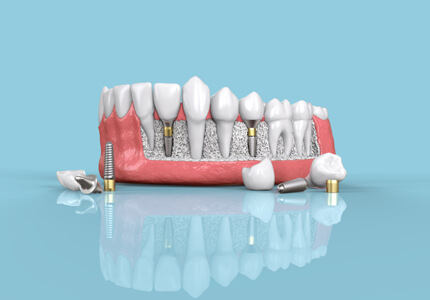
A dental implant is a titanium post designed to replace missing teeth. The post is surgically placed into the jawbone where the tooth is missing and provides a more permanent solution.
Crowns and conventional bridges or dentures may not be your only options when replacing missing teeth. For some people, dental implants offer a smile that looks and feels very natural. Implants are surgically placed below the gums over a series of appointments and fuse to the jawbone. Implants offer stability because they fuse to your bone, a process called osseointegration. Integration of the implants into your jaw also helps your replacement teeth feel more natural, and some people find the secure fit more comfortable than conventional substitutes. Candidates for dental implants must have healthy gums and adequate bone to support the implant.
What to Expect
Reasons for Dental Implants
- Replace a missing tooth
- Maintain healthy bone levels
- Help support overdentures
- Keep the look and feel of a real tooth where one is missing

What does a dental implant involve?
- Implant Site Preparation:
The gum tissue is opened to expose the bone area where the implant will be placed. In situations where there is insufficient bone structure, bone grafting may be a recommended procedure. Once a healthy bone has been established, a special drill is used to prepare the bone to receive the implant. - Placing the Implant:
After the bone has been prepared, the implant is placed and the tissue is sutured. After seven to ten days, the sutures are removed. The healing process takes three to six months. This is the amount of time it usually takes the implant to become part of the bone of the jaw.

- Attaching the Post:
When the gum tissue is ready, a special post is attached to the implant; it is the support for the new porcelain crown. Today’s technologies often include zirconium abutments attached to the implant post, to assure that the new porcelain tooth possesses translucency properties similar to a natural tooth. - Placing the Crown:
After impressions are taken a crown is made and shaded to match your existing teeth. The crown is then slipped over the post and cemented. This final prosthetic crown appears as a natural tooth.
There is a high rate of failure of implants in patients who smoke, so dental implants tend to not be an option for patients who are actively smoking. We will help you determine whether dental implants will be a good tooth replacement option for you. Proper brushing and flossing will maximize the longevity of your new dental implant.
Call us at (623) 633-7358 to schedule your consultation about dental implants.
Frequently Asked Questions
What Are Dental Implants Made Of ?
Dental implants are typically made from medical-grade titanium, a biocompatible material that integrates with natural bone. Titanium provides strength, stability, and long-term durability while minimising the risk of rejection or allergic reaction.
How Are Dental Implants Placed In The Jawbone?
Implants are surgically positioned into the jawbone under local anaesthesia or sedation. After placement, the implant gradually integrates with the surrounding bone during a healing process called osseointegration.
How Long Does Implant Surgery Take?
Single implant placement usually takes one to two hours, depending on complexity. Surgical time varies based on bone condition, number of implants, and whether additional procedures are required.
What Is The Healing Period After Implant Placement?
Healing typically takes three to six months. During this period, the implant bonds securely with the jawbone, creating a stable foundation for the final crown or prosthetic restoration.
What Is Osseointegration?
Osseointegration is the biological process where the implant fuses directly with the surrounding jawbone. This integration creates a strong, stable base capable of supporting normal biting and chewing forces.
Can Smokers Receive Dental Implants?
Smokers may qualify for implants, but smoking increases the risk of healing complications and implant failure. A detailed consultation helps evaluate individual risk and determine suitability.
What Happens If A Dental Implant Fails?
Implant failure is uncommon but may occur due to infection or inadequate integration. In many cases, the implant can be removed, the site treated, and replacement considered after healing.
Are Implant Crowns Custom Made?
Yes, implant crowns are custom fabricated to match surrounding teeth in shape, size, and color. This ensures natural appearance, functional bite alignment, and long-term durability.
Do Dental Implants Prevent Bone Loss?
Yes, implants stimulate the jawbone through functional chewing pressure. This stimulation helps maintain bone density and reduces progressive bone deterioration associated with missing teeth.
How Much Do Dental Implants Cost In Anthem?
Costs vary depending on implant number, bone condition, and restoration type. A consultation provides accurate evaluation, imaging, and a detailed cost estimate based on individual treatment needs.